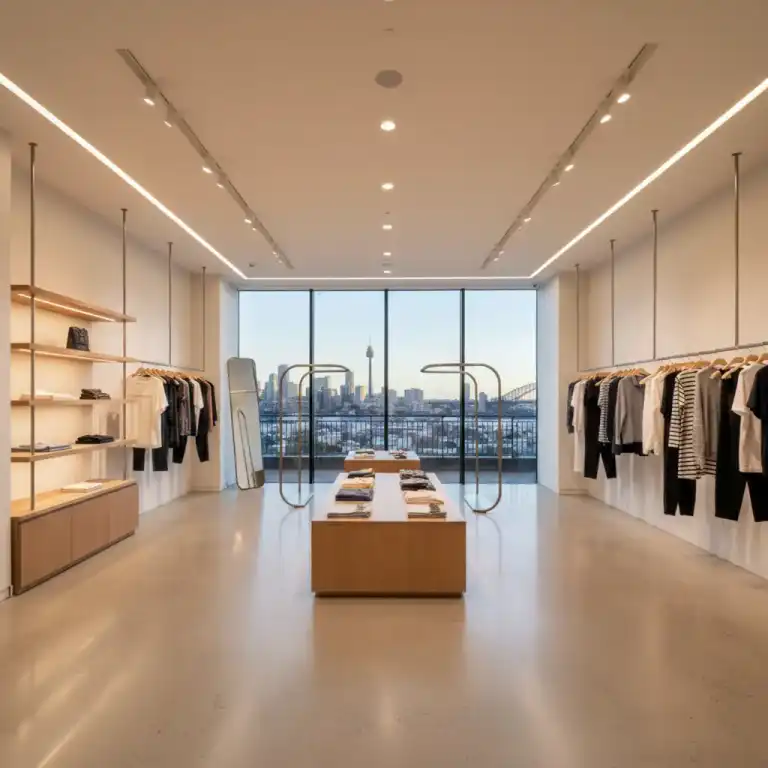
Shop Fit Outs Sydney | Complete Guide 2026 | Building Project Solutions
Shop Fit outs Sydney: Complete Guide to Retail & Commercial Fit out Process, Approvals & Costs
You've signed the lease.
Now what?
A shop fit out transforms an empty or outdated commercial space into a fully functioning, branded retail environment that supports customer experience and operations.
But in Sydney with busy retail precincts, heritage areas, strict council rules, and landlord requirements getting from signed lease to opening day is more complex than most business owners expect.
The biggest trap?
Starting construction without understanding approvals, compliance, or choosing a shopfitter who's never navigated Sydney's regulations.
Planning a retail, hospitality or service business fit out? Request a Proposal or Call Stephen before you sign that lease.
What is a shop fitout and why it matters in Sydney
A shop fit out is the process of designing, constructing and installing all the elements that make a commercial space functional and branded for your business.
This includes:
- Shopfront and signage
- Internal layouts and circulation
- Custom joinery, fixtures and displays
- Lighting, power and services
- Point-of-sale areas and back-of-house storage
- Finishes, flooring and ceiling treatments
- Accessibility compliance and fire safety
Sydney adds complexity through:
- Heritage streetscapes (The Rocks, Paddington, Newtown)
- Shopping centre fit out manuals
- CBD space constraints and high foot traffic
- Stricter council oversight in character areas
- Development Application (DA) vs Complying Development Certificate (CDC) pathways
Working with a shopfitter who understands these local regulations prevents approval delays, rework, and budget blowouts.
Review the NSW Planning Portal to understand commercial development requirements in your area.
Step-by-step shop fit out process in Sydney
🟡 1. Initial vision and business planning
- Define your brand, customer experience, product range and operational needs
- Consider storage, circulation, point-of-sale and merchandising display
- Identify target locations (CBD, shopping centre, strip retail)
🟡 2. Site selection and due diligence
- Inspect premises for size, services capacity, structure and heritage/strata restrictions
- Review lease terms for fit out obligations and landlord design guides
- Check make-good requirements before committing
Critical: Inspect with a shopfitter BEFORE signing the lease to identify costly structural or services limitations.
🟡 3. Engage shopfitter and concept design
- Work with an experienced shopfitter to translate vision into concept layouts
- Consider flow, merchandising zones and compliance requirements
- Identify required changes to services, structure and façades
With over 35 years of experience, Building Project Solutions Sydney manages retail, hospitality and commercial fit outs from concept to completion.
🟡 4. Detailed design and documentation
- Develop detailed plans, joinery drawings, reflected ceiling plans and services layouts
- Ensure compliance with National Construction Code (NCC) and accessibility standards
- Coordinate with engineers and consultants (fire, structural, mechanical) as needed
This stage is critical.
Insufficient documentation before pricing leads to vague quotes, unexpected extras and disputes during construction.
🟡 5. Planning approvals and building certification
Determine your approval pathway:
| Approval Type | When Required | Timeframe |
|---|---|---|
| Development Application (DA) | Major structural changes, signage, use changes, heritage areas | Several weeks to months |
| Complying Development Certificate (CDC) | Minor fit outs meeting pre-set standards | Shorter approval period |
| Minor Works | Very minor internal changes (council-dependent) | Minimal or no formal approval |
You'll also need:
- Construction Certificate - Demonstrates compliance with NCC before starting work
- Occupation Certificate - Required before you can legally open and trade
Check the NSW Planning Portal for official guidance on development applications and complying development in your area.
Understand DA vs CDC pathways →
🟡 6. Landlord and shopping centre approvals
Major shopping centres and commercial buildings have detailed fit out manuals covering:
- Design standards and shopfront requirements
- Work hours, loading dock access and site logistics
- Required documentation and approvals process
- Signage, branding and façade treatments
Submit early.
Landlord rejection can halt your entire program.
🟡 7. Pricing, procurement and program
- Use detailed documents to obtain clear, itemised quotes
- Schedule trades and order long-lead items (joinery, fixtures, lighting)
- Prepare a construction program aligned with landlord and council conditions
🟡 8. Construction and site management
Execute works including:
- Demolition and strip-out (if required)
- Services rough-in (electrical, plumbing, HVAC)
- Partitions, ceilings and wall finishes
- Custom joinery installation
- Shopfront, signage and branding
- Final fixtures, fittings and merchandising elements
During construction:
- Conduct regular site inspections
- Manage quality, safety, waste and noise
- Comply with council standard construction hours
- Coordinate with landlord site rules
🟡 9. Inspections, testing and certification
- Arrange mandatory inspections by certifiers at key stages
- Conduct commissioning for mechanical and electrical services
- Achieve final inspection sign-off
- Obtain Occupation Certificate before opening
🟡 10. Handover and opening
Receive complete documentation:
- As-built drawings (layouts and services)
- Compliance certificates (electrical, plumbing, fire, waterproofing)
- Equipment manuals and warranties
- Maintenance schedules
Set up merchandising, train staff, and open to customers.
See our recent retail and hospitality projects →
Approvals, permits and certification for NSW shop fit outs
Sydney shop fit outs must navigate multiple approval layers:
Council Planning Approval
Most fit outs require either:
- DA (Development Application) - For significant changes, heritage areas, or external modifications
- CDC (Complying Development Certificate) - For works meeting pre-approved standards
- Exempt/Minor Works - Very limited internal changes (varies by council)
City of Sydney notes that some minor works can proceed via CDC, while others require full DA review.
More on Sydney minor development approvals →
Building Certification
Commercial fit outs in NSW require:
- Construction Certificate - Certifier reviews plans against NCC and building codes
- Staged Inspections - Mandatory checks during construction
- Occupation Certificate - Final approval confirming compliance before trading
Understand tenancy fit out certification in NSW →
Essential Compliance Areas
Accessibility:
- Entries, circulation paths and facilities must comply with NCC access standards
- Consider wheelchair access, door widths, counter heights and accessible toilets
Fire Safety:
- Sprinklers, fire-rated materials, egress paths and emergency lighting
- Essential safety measures maintenance schedules
- Review NCC fire safety requirements for commercial buildings
Building Performance:
- Energy efficient lighting and HVAC
- Water efficiency measures
- Waste management during construction
City of Sydney commercial building improvement guide →
Local challenges in Sydney retail precincts
Heritage Streetscapes
Areas like The Rocks, Paddington, Surry Hills and parts of the CBD have strict heritage controls:
- Shopfront designs must preserve architectural character
- Materials, colours and signage require council approval
- Structural changes heavily scrutinised
Space Constraints and High Foot Traffic
Central Sydney locations demand:
- Durable finishes that withstand heavy use
- Layouts maximising every square metre
- Efficient staff and customer circulation
- Security and after-hours access considerations
Shopping Centre Requirements
Major centres impose:
- Detailed design standards
- Restricted work hours (often nights/weekends only)
- Mandatory use of approved contractors
- Strict noise, dust and access protocols
CBD Construction Management
- Limited loading zones and parking
- Noise restrictions in mixed-use buildings
- Waste removal coordination
- Tight site access requiring careful logistics
Timeframes and cost drivers for shop fit outs
⏱ Realistic Timeframes
| Stage | Typical Duration |
|---|---|
| Concept & Design | Several weeks |
| Planning Approvals | Weeks to months (DA longer than CDC) |
| Construction Certification | Additional weeks for plan review |
| Procurement & Fabrication | Varies with joinery complexity and materials |
| On-Site Construction | Depends on scope, services upgrades and access |
Factors that extend timeframes:
- Complex DA approvals in heritage areas
- Structural or façade changes
- Limited working hours (shopping centres, CBD buildings)
- Long-lead custom joinery or imported materials
- Scope changes during construction
💰 Major Cost Drivers
Shop fit out costs in Sydney depend on:
- Size of tenancy - Total area to be fitted out
- Existing condition - Amount of demolition or base-build rectification needed
- Services upgrades - Extent of mechanical, electrical and plumbing work
- Finishes quality - Custom joinery, premium materials, designer lighting
- Compliance requirements - Accessibility upgrades, fire protection, energy efficiency
- Location constraints - Heritage work, structural changes, after-hours construction
- Landlord requirements - Standards beyond minimum code compliance
- Site logistics - Access difficulty, tight programs, CBD restrictions
For detailed cost guidance specific to your project, request a tailored proposal.
Need clarity on approvals, timeframes and costs? Request a Proposal or Call Stephen for tailored advice.
How to choose the right shopfitter in Sydney
Use this checklist before hiring:
- Does the shopfitter have proven retail and commercial fit out experience in Sydney?
- Can they show completed projects in your type of business (retail, hospitality, medical, service)?
- Do they understand DA/CDC approval pathways and local council requirements?
- Can they manage the full process - design, approvals, construction, certification?
- Do they offer in-house capabilities like custom joinery and metal fabrication?
- Have they worked in your location type (CBD, shopping centre, heritage area, strip retail)?
- Do they provide detailed, itemised quotes - not vague estimates?
- Can they demonstrate compliance knowledge - accessibility, fire safety, NCC standards?
- Do they offer construction/project management to coordinate trades and inspections?
- Will they provide complete handover documentation - certificates, as-builts, manuals?
Review our shopfitting services to see our full capabilities.
Common shop fit out mistakes to avoid
⚠️ Not understanding local approval pathways Risk: Delays from lodging wrong application type or incomplete information.
Avoid: Confirm whether DA, CDC or minor works rules apply before committing to your program.
⚠️ Choosing a shopfitter without relevant experience Risk: Non-compliant work, poor layouts, weak permit coordination.
Avoid: Check portfolio, references and knowledge of Sydney regulations.
⚠️ Signing lease before technical due diligence Risk: Discovering costly structural or services limitations after lease execution.
Avoid: Inspect premises with a shopfitter before signing anything.
⚠️ Insufficient design and documentation before pricing Risk: Vague quotes, unexpected extras, construction disputes.
Avoid: Invest in detailed plans and clear scope before finalising contracts.
⚠️ Ignoring accessibility requirements until late Risk: Rework to meet access codes for entries, circulation and facilities.
Avoid: Address accessibility from concept stage check against NCC access standards.
⚠️ Underestimating fire safety implications Risk: Non-compliant fire protection requiring redesign or rectification.
Avoid: Coordinate with certifier and ensure plans reflect NCC fire requirements.
⚠️ Poor coordination with landlord or centre management Risk: Rejected designs, restricted access, halted works.
Avoid: Follow fit out manuals, submit required documents, communicate program early.
⚠️ Inadequate project management Risk: Missed deadlines, trade clashes, poor quality control.
Avoid: Ensure someone accountable for scheduling, coordination and inspections.
⚠️ Not planning for noise, waste and logistics Risk: Council complaints, penalties, disruption to neighbouring tenants.
Avoid: Prepare construction management approaches aligned to local requirements.
⚠️ Under-allowing contingency Risk: Running out of funds when latent conditions or price increases occur.
Avoid: Build in 10-15% contingency and prioritise critical works over optional upgrades.
⚠️ Weak handover documentation Risk: Difficulty maintaining systems and proving compliance later.
Avoid: Require complete handover pack with certificates, as-builts and manuals.
Shop fit out checklist for Sydney business owners
✅ Before You Build
- Clarify business model, brand and operational needs
- Inspect premises for services, structure, heritage/strata constraints
- Review lease and landlord fit out requirements
- Confirm approvals pathway (DA, CDC, minor works) with planner/certifier
- Engage experienced shopfitter and agree on scope responsibilities
- Develop detailed design and documentation before final pricing
🔧 During Construction
- Ensure Construction Certificate is in place before starting
- Coordinate work hours, logistics and noise with landlord and council
- Hold regular progress meetings and document scope changes
- Check workmanship and materials against drawings and specifications
- Confirm mandatory inspections completed and recorded
🧾 At Handover
- Receive all compliance certificates (electrical, plumbing, fire, waterproofing)
- Obtain as-built drawings for layouts and services
- Collect equipment manuals, warranties and maintenance schedules
- Confirm final Occupation Certificate issued before opening
Questions business owners ask (FAQs)
Do I need council approval for my shop fit out in Sydney, or is a CDC enough?
Depends on scope.
Minor internal works may qualify for CDC.
Structural changes, heritage areas, or external modifications typically require DA.
Check with your shopfitter and certifier before starting.
What building approvals and certificates are required before opening?
You need a Construction Certificate before starting work, staged inspections during construction, and an Occupation Certificate before you can legally trade.
How long does a typical shop fit out take from design to opening?
Timeframes vary based on approvals complexity, services upgrades, and site conditions.
Simple CDC fit outs may take weeks; complex DA projects in heritage areas can take months.
Factor in design, approvals, procurement and construction.
What should I look for when choosing a shopfitter in Sydney?
Proven retail/commercial experience, knowledge of DA/CDC pathways, full-service capability (design through certification), in-house joinery, and detailed quotes with clear scope.
How do accessibility requirements affect shop layout?
NCC access standards apply to entries, circulation paths, counters and facilities.
Address from concept stage not as an afterthought.
What fire safety considerations apply to my shop fit out?
Sprinklers, fire-rated materials, egress paths, emergency lighting and essential safety measures.
Coordinate with certifier to ensure NCC compliance.
How do heritage or character controls affect shopfront design in Sydney?
Heritage areas like The Rocks and Paddington have strict design controls preserving architectural character.
Council reviews materials, colours, signage and structural changes closely.
Do I need my landlord's approval in addition to council approvals?
Yes.
Shopping centres and commercial buildings require separate fit out approvals through landlord/centre management, even if you have DA/CDC from council.
What are the main cost drivers for a shop fit out in Sydney?
Size, existing condition, services upgrades, finishes quality, compliance requirements (accessibility/fire), heritage constraints, site logistics and landlord-specific standards.
Can I stay trading while my store is being refurbished?
Only with careful staging, safety measures and approvals.
Usually not recommended due to disruption, safety risks and compliance requirements.
What documentation should I receive at handover?
As-built drawings, all compliance certificates (electrical, plumbing, fire), equipment manuals, warranties, maintenance schedules, and Occupation Certificate.
Who is responsible for organising inspections and compliance certificates?
Shared between shopfitter, certifier and consultants.
Your shopfitter should coordinate the process, but confirm responsibilities upfront.
Final advice
A shop fit out in Sydney is more than construction it's navigating approvals, compliance, landlord requirements and council rules while staying on budget and program.
The difference between a smooth fit out and a budget blowout?
Choosing a shopfitter who understands Sydney's regulations, has proven commercial experience, and manages the full process from concept to Occupation Certificate.
Building Project Solutions has delivered retail, hospitality and commercial fit outs across Sydney for over 35 years.
We handle design, approvals, construction, custom joinery and certification so you can focus on opening your business.
Ready to start your shop fit out? Request a Proposal or Call Stephen
Also see:
Ready to discuss your project?
Our team has 35 years of experience delivering hospitality venues across Sydney.
Get in Touch